Choosing the right fruit and vegetable juicer depends on your juicing habits, budget, and desired juice quality. For beginners or those prioritizing speed and affordability, centrifugal juicers are ideal, typically costing $75-$300. If nutrient preservation and higher yield from leafy greens are key, masticating (slow) juicers are superior, ranging from $200-$750. Twin-gear juicers offer the highest extraction efficiency but are the most expensive, from $300-$2,000.

The Potent Benefits of Fresh Juicing
Integrating fresh juices into your daily routine provides a wealth of advantages: For shop curated home on this site.
- Superior Nutrient Absorption: Juicing removes indigestible fiber, allowing your body to more easily and rapidly absorb vital nutrients directly into the bloodstream. This makes fresh juice a highly efficient delivery system for essential vitamins and minerals.
- Increased Fruit and Vegetable Intake: For many, consuming the recommended daily servings of fruits and vegetables can be a challenge. Juicing offers a simple and delicious way to pack a significant amount of produce into a single glass, including a wider variety of greens and vegetables you might not typically enjoy eating whole.
- Boosted Energy and Well-being: Regular consumption of nutrient-rich, alkalizing vegetable juices can lead to improved energy levels, better digestion, enhanced mental clarity, and clearer skin.
- Reduced Food Waste: Juicers can help minimize waste by allowing you to use fruits and vegetables that are slightly past their prime but still perfectly edible.
Deciphering the Main Types of Fruit & Vegetable Juicers
Understanding the different types of juicers available is crucial, as each offers distinct advantages and caters to specific needs.
1. Centrifugal Juicers (Fast Juicers)
These are the most common and often the most affordable juicers, ideal for beginners.
- How They Work: Centrifugal juicers operate by shredding produce with a high-speed spinning blade. The pulp is then spun at high RPMs against a strainer, separating the juice through centrifugal force.
- Pros: They are fast, efficient for hard fruits and vegetables like apples and carrots, generally more compact, and budget-friendly. Most models feature wide feed chutes, minimizing pre-cutting.
- Cons: The high-speed action generates heat and introduces air, leading to oxidation. This can degrade heat-sensitive nutrients and enzymes, resulting in a juice that separates quickly, has more foam, and should be consumed immediately. They are also less effective at juicing leafy greens and soft fruits, often producing wetter pulp and lower yield.
2. Masticating Juicers (Slow Juicers / Cold Press Juicers)
Masticating juicers are often considered superior for those prioritizing nutrient quality and yield.
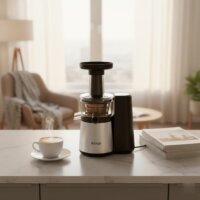
- How They Work: These “slow” juicers use a single auger (gear) to slowly crush and press fruits, vegetables, and leafy greens. This “chewing” action gently extracts juice without generating significant heat or excessive oxidation.
- Pros: They excel at preserving nutrients, enzymes, and flavor due to the low heat and minimal oxidation. They produce a higher quality, smoother juice with less foam, drier pulp (meaning more juice from your produce), and longer shelf life (up to 72 hours for vegetable juices). Masticating juicers are particularly effective with leafy greens, wheatgrass, and soft fruits, and some models offer versatility for making nut milks, sorbets, or even pasta. They also tend to operate more quietly than centrifugal models.
- Cons: Masticating juicers are slower in operation, typically more expensive, and may require more pre-chopping for their often narrower feed chutes. Cleaning can sometimes be more involved, though many newer models feature easy-clean designs.
3. Twin-Gear Juicers (Triturating Juicers)
|
Our Picks for the Best Fruit Juicer in 2026
As an Amazon Associate I earn from qualifying purchases.
|
||
| Num | Product | Action |
|---|---|---|
| 1 | Ninja NeverClog Cold Press Juicer, Powerful Slow Juicer with Total Pulp Control, Countertop, Electric, 2 Pulp Functions, Dishwasher Safe, 2nd Generation, Blue/Navy, JC151NV |

|
| 2 | Zulay Kitchen Cast Iron Juicer - Easy-to-Clean Heavy-Duty Manual Juicer, Professional Citrus Juicer - Stainless Steel Lemon Squeezer - Manual Citrus Press & Orange Squeezer - Orange Juicer (Black) |
|
| 3 | Ninja NeverClog Cold Press Juicer, Powerful Slow Juicer with Total Pulp Control, Countertop, Electric, 2 Pulp Functions, Dishwasher Safe, 2nd Generation, Steam Gray, JC151SL |
|
| 4 | Zulay Kitchen Metal 2-in-1 Lemon Squeezer - Sturdy Max Extraction Hand Juicer Lemon Squeezer Gets Every Last Drop - Easy to Clean Manual Citrus Juicer - Easy-Use Lemon Juicer Squeezer - Black/Yellow |
|
| 5 | Juicer Machines with 5.8\" Large Feed Chute, Cold Press Juicer for Whole Vegetables and Fruits 400W, Slow Masticating juicer Easy to Clean Juice Extractor Machine High Juice Yield |
|
| 6 | Zulay Kitchen Metal 2-in-1 Lemon Squeezer - Sturdy Max Extraction Hand Juicer Lemon Squeezer Gets Every Last Drop - Easy to Clean Manual Citrus Juicer - Easy-Use Lemon Juicer Squeezer - Blue/Yellow |
|
| 7 | Ninja NeverClog Cold Press Juicer, Powerful Slow Juicer with Total Pulp Control, Countertop, Electric, 2 Pulp Functions, Dishwasher Safe, 2nd Generation, Charcoal, JC151 |
|
| 8 | Zulay Kitchen Metal 2-in-1 Lemon Squeezer - Sturdy Max Extraction Hand Juicer Lemon Squeezer Gets Every Last Drop - Easy to Clean Manual Citrus Juicer - Easy-Use Lemon Juicer Squeezer - Yellow/Red |
|
| 9 | Zulay Kitchen Metal 2-in-1 Lemon Squeezer - Sturdy Max Extraction Hand Juicer Lemon Squeezer Gets Every Last Drop - Easy to Clean Manual Citrus Juicer - Easy-Use Lemon Juicer Squeezer - Red/Yellow |
|
| 10 | Zulay Kitchen Metal 2-in-1 Lemon Squeezer - Sturdy Max Extraction Hand Juicer Lemon Squeezer Gets Every Last Drop - Easy to Clean Manual Citrus Juicer - Easy-Use Lemon Juicer Squeezer - Black/Red |
|
At the pinnacle of juicing technology, twin-gear juicers offer the highest extraction efficiency.
- How They Work: These advanced masticating juicers feature two interlocking gears that grind produce into incredibly fine particles before pressing out the juice.
- Pros: They deliver the highest juice yield and superior nutrient retention due to their extremely slow speed and thorough extraction. They are exceptional for all types of produce, including fibrous greens and wheatgrass, ensuring minimal waste.
- Cons: Twin-gear juicers are the most expensive option, are typically slower to operate, and often have more components, making them potentially more challenging to clean.
4. Citrus Juicers
While not all-purpose, citrus juicers are worth a mention for their specific function.
- How They Work: Designed exclusively for lemons, limes, oranges, and grapefruits, they use a reamer to extract juice from halved citrus fruits. They can be manual presses or electric models with motorized reaming cones.
- Pros: Simple, compact, and very affordable, perfect if your primary goal is fresh citrus juice.
- Cons: Limited to citrus fruits only.
Key Considerations When Choosing Your Juicer
To select the best fruit and vegetable juicer for your home, weigh these factors:
- Your Juicing Habits and Produce Preferences: Consider what you’ll be juicing most often. If it’s primarily hard fruits and vegetables and you prioritize speed, a centrifugal juicer might suffice. If leafy greens, wheatgrass, soft fruits, and maximum nutrient retention are your focus, a masticating or twin-gear juicer is a better investment.
- Budget: Prices vary significantly across types. Centrifugal juicers typically range from $75 to $300, masticating juicers from $200 to $750, and twin-gear models from $300 to $2,000. Decide how much you’re willing to invest in your juicing journey.
- Juice Quality vs. Speed: There’s a trade-off. Fast centrifugal juicers offer convenience but lower nutrient integrity, while slower cold press juicers deliver superior quality.
- Ease of Cleaning: Juicers require regular cleaning. Look for models with dishwasher-safe parts or innovative self-cleaning features to simplify upkeep. Some vertical masticating juicers are designed for quicker disassembly and rinsing.
- Noise Level: If you plan to juice early in the morning or late at night, a quieter masticating juicer will be preferable to a typically louder centrifugal model.
- Feed Chute Size: Wider feed chutes reduce preparation time as they can accommodate larger pieces of produce, sometimes even whole fruits. Narrower chutes necessitate more chopping.
- Countertop Space and Storage: Juicers can be sizable appliances. Consider your kitchen’s available space for both operation and storage.
- Versatility: Some masticating juicers offer attachments or functions beyond basic juicing, such as making nut butter, sorbet, or baby food.
- Warranty: A longer warranty, especially on the motor, can indicate a manufacturer’s confidence in the product’s durability and provide peace of mind for your investment.
Conclusion
A fruit and vegetable juicer is more than just a kitchen gadget; it’s a gateway to a healthier lifestyle. By carefully considering the types of juicers available and the factors that align with your personal needs and preferences, you can confidently select an appliance that will help you effortlessly incorporate the vibrant power of fresh produce into your daily routine. Whether you opt for the speed of a centrifugal model, the nutrient-preserving prowess of a masticating juicer, or the ultimate efficiency of a twin-gear system, the right juicer will empower you to enjoy delicious, homemade juice and reap its profound health benefits for years to come.
Frequently Asked Questions
What are the main types of fruit and vegetable juicers available?
There are four main types of fruit and vegetable juicers: centrifugal (fast juicers), masticating (slow/cold press juicers), twin-gear (triturating juicers), and citrus juicers. Each type offers distinct advantages in terms of speed, nutrient retention, and cost.
Which type of juicer is best for preserving nutrients and enzymes?
Masticating (slow/cold press) juicers and twin-gear juicers are best for preserving nutrients and enzymes. They operate at lower speeds, minimizing heat and oxidation, which helps maintain the integrity of heat-sensitive vitamins and enzymes. Masticating juicers can keep juice fresh for up to 72 hours.
How much should I expect to pay for a quality fruit and vegetable juicer?
The price of a quality fruit and vegetable juicer varies significantly by type. Centrifugal juicers typically cost $75-$300, masticating juicers range from $200-$750, and advanced twin-gear models can be $300-$2,000. Citrus juicers are generally the most affordable.
Are centrifugal juicers good for leafy greens and soft fruits?
Centrifugal juicers are less effective at juicing leafy greens and soft fruits. Their high-speed operation often results in wetter pulp and lower juice yield from these types of produce. Masticating or twin-gear juicers are better suited for leafy greens and soft fruits.
What factors should I consider when buying a new juicer?
When buying a new juicer, consider your juicing habits, budget, desired juice quality, ease of cleaning, noise level, feed chute size, countertop space, versatility, and warranty. These factors will help you choose a model that best fits your lifestyle and needs.
Cooking gear we tested in our own kitchens
Free PDF — preheat times measured on 10 popular air fryers.
I picked up a centrifugal juicer in the $100 range, and it’s okay for quick orange juice. My only real complaint is how much pulp it leaves behind, even after I try to strain it. It’s fast, which is great for busy mornings, but I wish it was a bit more efficient with the separation. Cleaning isn’t too bad though.
I’ve been using a twin-gear juicer for about six months now, and the extraction efficiency is truly unmatched. I can really tell the difference in the quality of my carrot and apple juice. It was a bigger investment, but for someone serious about juicing daily, it’s been fantastic for getting the most out of my fruits and veggies.
As a beginner to juicing, I really appreciated the breakdown of juicer types. I went with a mid-range centrifugal model, and it’s perfect for getting my daily fruit and vegetable intake up. It’s super easy to use and clean, which was a big factor for me. I’m already feeling more energized!
I finally took the plunge and bought a masticating juicer after reading about the benefits for leafy greens. It’s definitely a game-changer for my morning celery juice! The yield is incredible, and I feel like I’m getting so much more out of my produce compared to my old centrifugal one. Worth every penny for the nutrient preservation.